High mast lighting is essential for illuminating large areas such as highways and sports fields. With advancements in technology, LED lighting has emerged as a popular choice over traditional High-Intensity Discharge (HID) lights. What are the benefits of LED over HID for high mast lighting? This question leads us into a discussion about efficiency, longevity, and cost-effectiveness.
LED lights consume less energy than HID lights, significantly reducing operational costs. They have a longer lifespan, which means less frequent replacements. This not only saves on maintenance expenses but also minimizes disruptions in lighting. Moreover, LED technology provides better light quality. This leads to improved visibility for drivers and players alike, enhancing safety in various settings.
However, there are some challenges. Initial installation costs for LED systems can be higher. Continued advancements in LED technology may also result in rapid obsolescence. It’s crucial to weigh these factors when considering a switch. Ultimately, the benefits of LEDs for high mast lighting applications highlight their growing relevance in modern infrastructure.
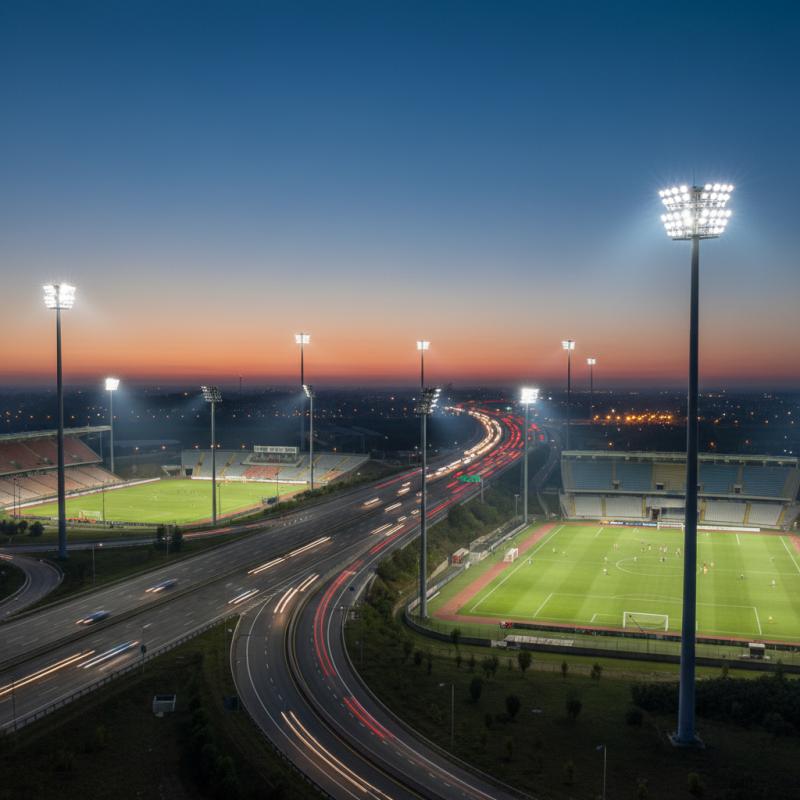
LED lighting has gained significant attention for high mast applications due to its superior energy efficiency compared to traditional High-Intensity Discharge (HID) lights. According to the U.S. Department of Energy, LED lights consume about 75% less energy than HID lights. This stark difference means substantial cost savings over time. In addition, LED lights offer longer lifespans, lasting nearly 25,000 hours, while HID lights typically last only about 15,000 hours.
The efficiency of LED technology not only reduces energy consumption but also minimizes greenhouse gas emissions. A study by the Rocky Mountain Institute indicates that replacing HID with LED lighting can decrease carbon emissions by over 1.4 billion metric tons annually in the United States alone. This data highlights the environmental benefits of transitioning to LED lighting.
Tip: When switching to LED, consider the installation costs. Although the upfront investment can be higher, the long-term savings yield a quicker return on investment. Regular maintenance checks are also crucial to ensure optimal performance. Underestimating these aspects may lead to unexpected expenses.
Moreover, LEDs produce less heat, which can reduce HVAC costs in facilities relying heavily on high mast lighting. This cooling effect can contribute to energy savings throughout the building. However, the initial installation of LED systems may require adjustments to existing fixtures or infrastructure. Planning these transitions can be complex, so it's essential to evaluate the current setup thoroughly before proceeding.
| Benefit | LED Lighting | HID Lighting |
|---|---|---|
| Energy Efficiency | Up to 80% more efficient | Less efficient |
| Lifespan | 50,000+ hours | 15,000-24,000 hours |
| Instant On | Instant full brightness | Warm-up time required |
| Color Temperature Options | Various options available | Limited options |
| Environmental Impact | No toxic materials | Contains hazardous materials |
| Durability | Impact resistant | More fragile |
| Maintenance Costs | Lower maintenance costs | Higher maintenance costs |
| Light Quality | Superior quality | Generally poorer quality |
| Dimming Capability | Easier dimming options | Limited dimming options |
| Heat Emission | Lower heat output | Higher heat output |
: LED lights consume about 75% less energy than HID lights, resulting in substantial cost savings.
LED lights can last nearly 25,000 hours, which is significantly longer than the 15,000 hours typical for HID lights.
Replacing HID with LED lighting can potentially decrease carbon emissions by over 1.4 billion metric tons annually.
Yes, the upfront investment for LEDs can be higher, and planning the installation is essential for optimal performance.
LEDs produce less heat, which can lead to reduced HVAC costs in facilities using high mast lighting extensively.
LED lights offer superior color rendering and consistent illumination, which enhances visibility and safety in outdoor areas.
LEDs can be directed more precisely, reducing light pollution and making urban areas more livable.
There is room for improvement in recycling practices for used LEDs to minimize environmental impact.
Yes, HID lights often contain mercury, making proper disposal essential to prevent contamination.
Users should carefully evaluate their current setup and consider long-term savings versus initial costs.
LED lighting offers numerous advantages over HID lighting for high mast applications. One of the key benefits is energy efficiency, where LEDs consume significantly less power than HID fixtures, leading to substantial savings on electricity bills. Additionally, LEDs boast a much longer lifespan, which translates to reduced maintenance and replacement costs over time. This longevity, combined with superior light quality, enhances visibility and safety in outdoor environments, making LED a preferable choice for high mast lighting.
Furthermore, the environmental impact of LED lighting is notably positive, as it reduces energy consumption and minimizes carbon footprint compared to HID solutions. Cost savings, longevity, and eco-friendliness collectively illustrate the question, "What are the benefits of LED over HID for high mast lighting?" Overall, the comprehensive advantages of LED technology make it an increasingly favored option for efficient and sustainable high mast lighting solutions.

 Rhynox Lighting