Light pollution is an often overlooked issue in residential areas. It affects our sleep, wildlife, and even our mental health. As urban development continues, the bright lights from homes and streets can obscure the beautiful night sky. Many residents wonder, "How to prevent light pollution in residential areas?" Fortunately, there are effective strategies to tackle this problem.
Understanding the sources of light pollution is the first step. In many neighborhoods, excessive outdoor lighting contributes significantly. Streetlights and illuminated signs can create glare and skyglow, diminishing our ability to appreciate the stars. These challenges call for community awareness and action.
Effective solutions can include using downward-facing fixtures, installing timers, and selecting warm-colored bulbs. Residents can also work together to create an action plan for their area. However, changing habits can be hard. Reflections on our own lighting practices are essential. Simple adjustments can lead to a remarkable difference, both for us and the environment.
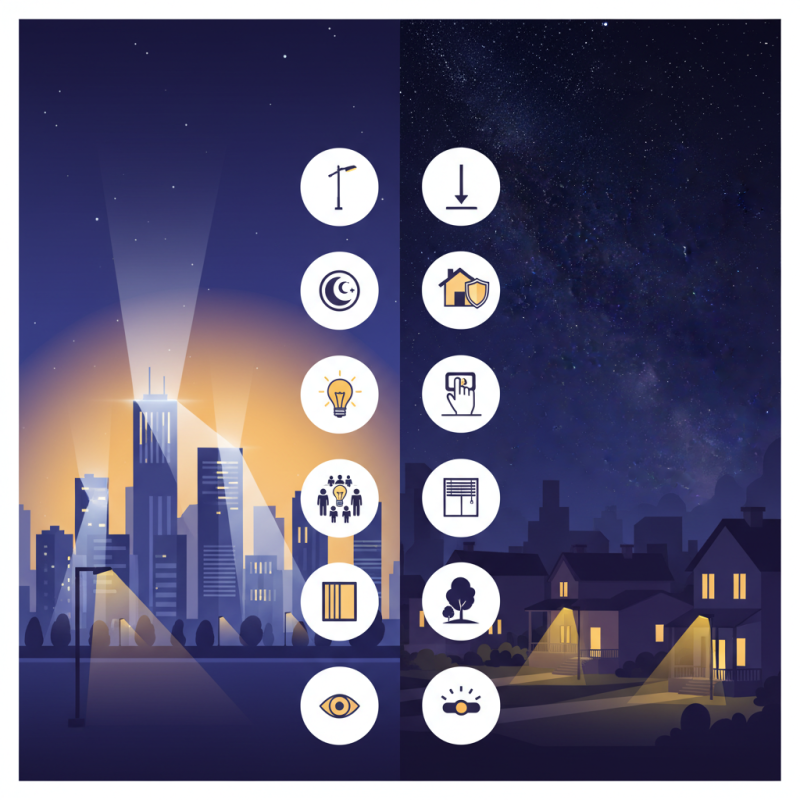
Light pollution affects residential areas in multiple ways. It disrupts ecosystems and interferes with natural behaviors in wildlife. Birds, for instance, may collide with brightly lit buildings during migration. A study by the National Park Service indicates that bright artificial lights can lead to significant declines in certain species populations.
Residents often underestimate how artificial lighting impacts their health. Exposure to excessive light at night can disrupt circadian rhythms. This disruption contributes to sleep disorders and can lead to various health issues. According to the American Medical Association, sleep disruption can increase risks for obesity, diabetes, and cardiovascular diseases. Communities must recognize the need to balance safety and comfort with the preservation of natural night conditions.
Navigating light pollution involves a collective effort. Many neighborhoods still rely on outdated lighting systems. These can project light upward and outward, rather than downward. Adjusting lighting fixtures can minimize unnecessary light spillage. It’s essential to promote awareness and engage local governments in implementing better lighting strategies. Thoughtful action can lead to a brighter future, both literally and figuratively.
Identifying sources of light pollution in residential areas is crucial for effective mitigation. Many households use outdoor lighting extensively. Streetlights, porch lights, and decorative fixtures contribute to excessive brightness at night. Pay attention to how these lights are positioned. For instance, downward-facing lights can be less intrusive.
Another common source is neighboring properties. Bright floodlights and illuminated signs from local businesses can disturb the night. It can feel overwhelming in areas with many such lights. Understanding your immediate environment allows you to become an advocate for better lighting practices. Take a moment to observe when lights shine most brightly and how they affect your living space.
Additionally, reflections from surrounding buildings can amplify light pollution. Consider conducting a nighttime assessment. Walk around your neighborhood to assess the glow of various sources. This can help identify which lights are unnecessary. Documenting these instances can lead to meaningful discussions about community-wide lighting solutions. Striking a balance between safety and darkness is essential for preserving our night skies.
Implementing effective outdoor lighting solutions is crucial for combating
light pollution in residential areas. According to the
International Dark-Sky Association, about 80% of the world's population lives under
light-polluted skies. This statistic highlights the urgency of adopting better lighting practices.
One key tip is to use LED lights with lower lumens. These lights provide adequate illumination
while minimizing glare. Selecting warm-colored bulbs also helps reduce blue light interference.
Studies show that warmer hues lessen the impact on nocturnal wildlife and human sleep patterns.
Additionally, shielding outdoor fixtures can direct light downward. This approach reduces skyglow and creates a more inviting atmosphere.
Ensuring lights are only active when needed, through timers or motion sensors, optimizes usage.
These measures not only combat light pollution, but they also cut energy costs significantly. In fact, the
U.S. Department of Energy reports that using energy-efficient lighting can lower
energy consumption by at least 50%.
Employing these tips promotes a more sustainable lifestyle while protecting our night skies. It’s a step towards creating a balanced
harmony between safety and environmental health. Light pollution is a concern we all share, and with mindful actions, we can make a difference.
Light pollution is a growing concern in residential areas. Community awareness plays a vital role in addressing this issue. According to the International Dark-Sky Association, about 80% of the world’s population lives under light-polluted skies. This statistic captures the urgency for communities to get involved. Local workshops can educate residents on the impacts of light pollution, which include disrupted ecosystems and human health issues.
Local governments can promote initiatives that encourage residents to adopt responsible lighting practices. Community members might not realize that excessive outdoor lighting can interfere with wildlife. Birds, for example, can be disoriented by artificial lights during migration. Engaging in citizen science projects can help gather local data. Residents measuring light levels in their neighborhoods can provide valuable insights. This hands-on approach fosters a sense of ownership and responsibility towards their environment.
Shared stories of success can motivate others to join the cause. Neighborhood groups can work together to create “dark sky” zones. Residents can also share their experiences on social media, increasing visibility. Ultimately, encouraging dialogue and action within communities is essential. Light pollution affects us all, and it requires collective effort to find solutions.
Adopting smart technology can significantly reduce light pollution in residential areas. Smart lighting systems allow you to control brightness and timing. With motion sensors, lights only activate when needed. This cuts down unnecessary energy use and light emission. Smart bulbs can even be programmed to adapt to sunset, dimming automatically as night falls.
Another option is using smart home apps that monitor energy consumption. These apps provide insights into usage patterns. You can adjust settings to minimize outdoor lighting. Homeowners often overlook the impact of excessive yard lights. By reducing their brightness or switching them off when not in use, you help the environment.
However, implementing such technologies may require an initial investment. Some may find the transition challenging. Not everyone is tech-savvy, leading to potential frustration. It’s essential to balance convenience with environmental responsibility. Reflecting on personal habits can pave the way to more effective solutions against light pollution.
: Light pollution refers to excessive artificial light that disrupts natural darkness, affecting ecosystems and human health.
It disrupts animal behaviors, such as bird migrations, leading to collisions with illuminated structures.
Excessive nighttime light can disrupt sleep, increasing risks for obesity, diabetes, and cardiovascular diseases.
Assess streetlights, porch lights, and nearby commercial signage to understand their impact on nighttime brightness.
Use LED lights with lower lumens and warm colors to decrease glare and support sleep and wildlife.
Shielding directs light downward, minimizing skyglow and creating a more inviting night environment.
These tools ensure lights only operate when necessary, reducing energy waste and light pollution.
Collective awareness can lead to better lighting practices and local government involvement in effective solutions.
Preserving natural night conditions enhances health and protects the environment, providing a better quality of life.
Documenting instances of unnecessary lighting can spark discussions for community-wide changes and improvements.
Light pollution is a growing concern in residential areas, affecting not only the night sky's beauty but also human health and wildlife. To address the question of how to prevent light pollution in residential areas, it's essential to first understand its impacts and identify common sources in our environment, such as excessive street lighting and poorly designed outdoor fixtures.
Effective outdoor lighting solutions can significantly mitigate the issue, including the use of fully shielded fixtures and dimmer switches. Promoting community awareness and involvement is crucial, as local initiatives can encourage residents to be mindful of their lighting choices. Furthermore, adopting smart technology at home, like motion sensors and smart bulbs, can further reduce unnecessary light emissions. By following these strategies, communities can work together to create a more sustainable and visually appealing nighttime environment.

Rhynox Lighting