Effective street lighting is crucial for urban safety and aesthetics. Properly calculated spacing between street light poles ensures optimal illumination and energy efficiency. According to the Illuminating Engineering Society (IES), well-spaced lights enhance visibility, reduce accidents, and improve community safety.
When considering "how to calculate the spacing between street light poles," several factors come into play. Standards suggest spacing typically ranges from 100 to 150 feet apart. However, this can change based on pole height, street width, and light type. For example, high-intensity LEDs may require different spacing than traditional sodium vapor lights.
To achieve effective lighting, review local guidelines and industry reports. Many cities have adopted innovative models based on energy efficiency. Yet, challenges may arise in balancing the light distribution with cost. Each urban area has unique requirements. Thoughtful planning is key, as improper spacing can lead to dark spots or over-illumination. Thus, understanding these nuances can make a significant impact.
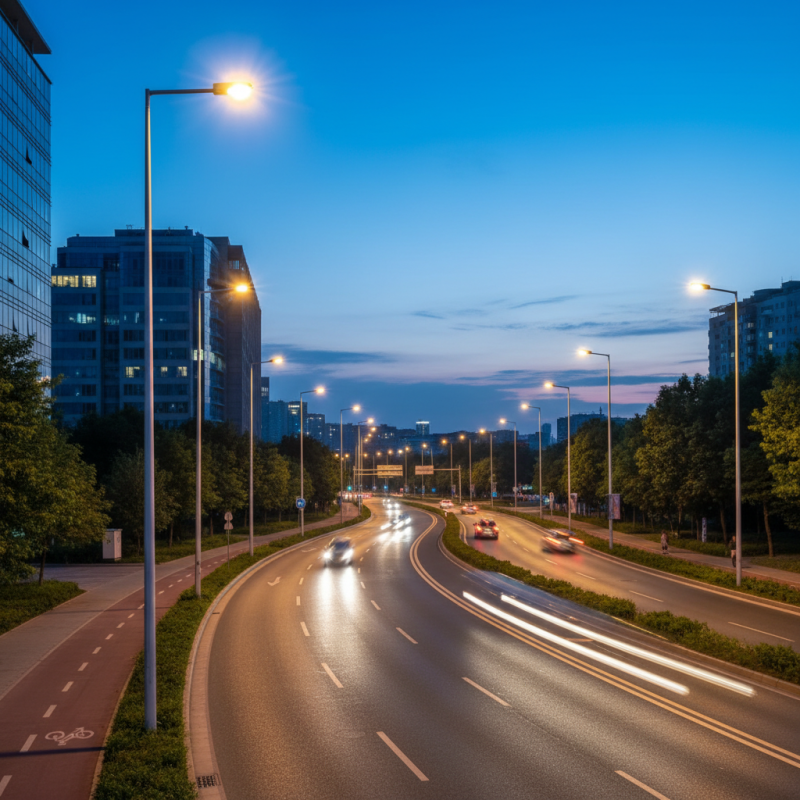
Factors Influencing Street Light Pole Spacing Calculations
Street light pole spacing is crucial for urban planning. Various factors influence these calculations. First, consider the type of area. Residential areas require closer spacing compared to highways. The height of the poles also plays a role. Taller poles can be spaced further apart, while shorter ones must be closer to maintain visibility.
Another vital factor is the illumination level required. Different streets have different lighting needs. For example, busy intersections demand brighter lighting than quiet side streets. Reflective surfaces, like sidewalks or buildings, can also impact light distribution. Urban landscapes often create shadows that may need additional poles.
Additionally, environmental elements should not be ignored. Trees may obstruct light, requiring adjustments in pole placement. Historical buildings or structures can complicate spacing patterns. Each decision has implications. Balancing aesthetics, functionality, and safety is no small feat. Sometimes, what seems practical may not yield the expected results. Careful planning and adjustments often reveal better outcomes.
Understanding Light Intensity Requirements for Different Areas
When calculating spacing for street light poles, understanding light intensity requirements is crucial. Different areas necessitate varying levels of illumination. For instance, residential zones typically require about 0.5 to 1.0 foot-candles. In contrast, commercial areas could need up to 2.0 to 5.0 foot-candles. Such distinctions are vital for effective lighting design.
The illuminance levels help define spacing. According to the Illuminating Engineering Society (IES), the recommended spacing for street lights is about 100 to 150 feet apart in residential areas. This distance ensures uniform light distribution. However, factors such as pole height and lamp type can affect the effectiveness of this setup. For example, using LED fixtures can increase spacing due to their higher lumen output.
However, relying solely on guidelines can lead to oversight. Every area has unique characteristics that might not fit standard formulas. Landscape features, building heights, and road widths all influence the final design. In some cases, streets may require additional lighting in darker sections. Continual assessment and adjustments are essential for optimal performance.
Determining Optimal Pole Heights for Effective Illumination
Determining the optimal height for street light poles is crucial for effective illumination. Industry standards indicate a height range of 10 to 30 feet for typical applications. For residential areas, poles around 12 to 15 feet improve visibility without causing light pollution. In commercial zones, heights of 20 to 30 feet are common to cover larger spaces and minimize dark spots.
Spacing also depends on pole height. A common rule is to space poles 1.5 to 2.5 times their height apart. This ensures even light distribution. However, adjusting for obstacles like trees or buildings can complicate planning. In urban environments, this may lead to uneven lighting if not carefully considered. It’s a balancing act between effective visibility and avoiding harsh glare.
Some cities have found that increasing pole height beyond 20 feet can lead to reduced glare while expanding coverage. However, this might complicate maintenance. Many reports suggest that taller poles may require advanced lighting technologies. Community feedback has emphasized the need for practical illumination that meets safety standards. Striking a balance between height, spacing, and technology is essential for successful urban lighting design.
Calculating Street Widths and Their Impact on Pole Placement
Calculating street widths is crucial for effective street lighting pole placement. The width of the road influences how far light can effectively spread. Wider streets may require more poles to ensure adequate illumination. This means planners must evaluate the light distribution patterns from each pole. For instance, a single pole may not suffice for a broad avenue, while it could sufficiently illuminate a narrow street.
Consider the height of the poles and the type of fixtures used. For taller poles, light distribution may extend further. However, it can also create shadows if not positioned properly. The placement should ensure that light overlaps somewhat. Gaps between poles can lead to dark spots, creating safety concerns. It’s important to balance aesthetics with functionality.
Reflecting on past plans can reveal areas of improvement. Some projects have faced challenges due to unexpected street widths. Feedback from residents can guide future adjustments. It’s vital to continually assess the effectiveness of pole placement as urban landscapes evolve. Regular evaluations can enhance both safety and visual appeal in city planning.
How to Calculate Spacing for Street Light Poles Effectively
This chart illustrates the optimal spacing for street light poles based on different street widths. Proper placement of street lights increases safety and visibility.
Evaluating Local Regulations and Standards for Street Lighting
Evaluating local regulations and standards for street lighting is essential for effective street light pole spacing. Each municipality may have distinct requirements, often influenced by public safety, energy efficiency, and urban planning principles. For instance, according to the Illuminating Engineering Society (IES), the average spacing for street light poles ranges from 100 to 150 feet, depending on light type and street width. Local codes may dictate specific luminous intensities, influencing how closely poles should be placed.
In many areas, a comprehensive analysis of zoning laws and environmental factors can impact lighting design. Urban areas might mandate stricter regulations to reduce light pollution. Reports indicate that over 30% of municipalities have adopted standards focused on minimizing glare. This requires engineers and planners to consider pole height and luminaire design. Collaboration with local agencies can ensure compliance and fulfillment of community needs, but it can also lead to conflicting guidelines. Stakeholders must navigate these complexities carefully to create effective lighting solutions.
Adhering to safety guidelines is critical. The National Fire Protection Association (NFPA) emphasizes adequate illumination levels to prevent accidents. However, local regulations may limit pole height, complicating spacing. A balance must be struck between compliance and efficiency. Continuous engagement with regulatory bodies is vital. It helps reflect on existing standards and fosters improvements. By staying informed, planners can adapt to new challenges and enhance community well-being through innovative lighting designs.
How to calculate spacing for street light poles effectively? - Evaluating Local Regulations and Standards for Street Lighting
| Area Type |
Pole Height (ft) |
Spacing (ft) |
Lumens per Pole |
Local Regulation Standard |
| Residential |
12 |
150 |
8000 |
3 |
| Commercial |
14 |
120 |
10000 |
4 |
| Industrial |
16 |
200 |
12000 |
5 |
| Highway |
20 |
300 |
15000 |
6 |
FAQS
: Residential areas usually need about 0.5 to 1.0 foot-candles for adequate illumination.
Street lights in residential zones should ideally be spaced about 100 to 150 feet apart.
Spacing can change based on pole height, lamp type, and local landscape features.
Relying on standard guidelines may overlook unique characteristics of specific areas.
Wider roads require more poles to ensure proper light distribution than narrower streets.
While tall poles can extend light coverage, they may also create unwanted shadows.
Regular evaluations can improve safety and adapt to changing urban environments.
Feedback can reveal challenges and guide necessary adjustments for future lighting plans.
Gaps can result in dark spots, posing potential safety hazards in poorly lit areas.
A balance between aesthetics and functionality is crucial for effective street lighting design.
Conclusion
Effective street lighting is crucial for safety and visibility, and calculating the spacing between street light poles plays a significant role in this process. Understanding the factors that influence pole spacing begins with evaluating light intensity requirements tailored to different areas, which directly impacts how well a space is illuminated. Additionally, determining optimal pole heights is essential, as it affects the distribution of light across the street.
Calculating street widths is another important aspect, as it determines the appropriate pole placement to ensure even lighting without any dark spots. Furthermore, adhering to local regulations and standards for street lighting is vital to ensure compliance and effectiveness. Therefore, when considering "how to calculate the spacing between street light poles," it is important to integrate these various elements into a comprehensive planning approach to achieve optimal lighting efficiency and safety in public spaces.

 Rhynox Lighting