When discussing road safety, one often overlooks the significance of color temperature (CCT). CCT affects visibility during nighttime driving and in poor weather conditions. According to Dr. Emily Johnson, an expert in traffic safety, “The right CCT can significantly enhance a driver's ability to see and react.” This highlights the importance of understanding why CCT (Color Temperature) is important for road safety.
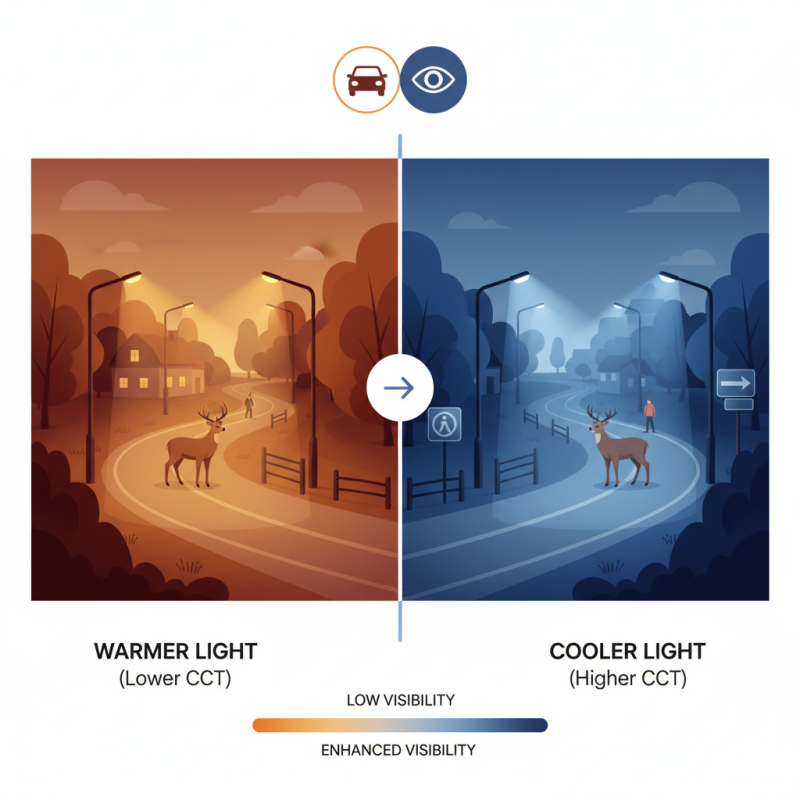
Different light temperatures can impact how drivers perceive their surroundings. For instance, warmer light (lower CCT) offers a soft glow, which may be comforting but can hinder visibility. Conversely, cooler light (higher CCT) provides sharper contrast and better visibility, creating a safer driving environment. Each of these choices has implications for how drivers respond to hazards.
However, choosing the right CCT is not a straightforward task. Many factors come into play, including the type of road, surrounding environment, and time of day. Additionally, improper use of CCT could lead to adverse effects, such as visual discomfort. Understanding the nuances of CCT is essential for making informed decisions that enhance road safety.
CCT, or Controlled and Continuous Training, plays a crucial role in enhancing road safety standards. Proper CCT ensures that drivers and traffic personnel have the knowledge and skills needed to navigate today’s complex road systems. Regular training sessions keep them updated on the latest traffic regulations and safety measures.
Moreover, effective CCT can significantly reduce accident rates. Training programs emphasize the importance of defensive driving techniques. They also cover how to respond to emergency situations. This proactive approach shapes safer behaviors on the road. It addresses gaps in a driver’s understanding, which is essential for staying safe on the road.
Choosing the right CCT program requires careful consideration. Look for courses that focus on practical skills and real-world scenarios. It is essential to check trainers' qualifications. Their experience and authority in traffic safety matters can make a difference. Reflecting on past experiences can help identify areas needing improvement. Always aim for programs that prioritize engagement and continuous learning.
| Dimension | Details |
|---|---|
| CCT Definition | Critical Control Technique used to enhance road safety. |
| Importance of CCT | Reduces accidents, improves compliance with traffic laws, and enhances driver awareness. |
| Key Benefits | Lower incident rates, reduced insurance costs, and increased public confidence in road safety. |
| Factors to Consider When Choosing CCT | Road conditions, traffic density, user demographics, and relevant regulations. |
| Implementation Challenges | Funding, training requirements, and stakeholder engagement. |
| Assessment Methods | Surveys, traffic data analysis, and accident statistics review. |
| Future Trends | Incorporation of technology and data analytics for proactive safety measures. |
: CCT stands for Correlated Color Temperature. It is crucial for improving visibility and reducing accidents.
Warmer lights (around 3000K) may obscure details. Cooler lights (above 4000K) enhance visibility during emergencies.
Consider location, weather, and traffic patterns. Urban areas benefit from brighter, cooler lights.
Yes, cooler lights are linked to fewer crime-related incidents in bright urban settings.
Engaging local communities helps understand their preferences and how current lighting affects behavior.
CCT enables real-time vehicle monitoring, allowing for timely interventions that can prevent accidents.
Better monitoring helps reduce sudden stops. Drivers receive alerts about speed and hazards, reducing congestion.
Yes, some areas resist CCT due to high costs, though benefits may justify the investment in the long run.
Gaining public trust can be difficult. Investment is needed despite promising potential benefits for road safety.
Brighter lights enhance alertness, while warmer tones promote calmness, balancing visibility and comfort is key.
The article titled "Why is CCT Important for Road Safety and How to Choose it?" underscores the crucial role that Color Temperature (CCT) plays in enhancing road safety. It discusses how appropriate CCT levels can significantly improve visibility during nighttime driving and adverse weather conditions, thereby reducing accident rates. The article outlines key factors to consider when selecting suitable CCT for road safety, including the type of road, traffic density, and environmental conditions.
Furthermore, it explores various types of CCT systems and their applications in traffic management, emphasizing their impact on accident prevention and traffic flow improvement. With advancements in CCT technology, the article highlights future trends that promise to create safer road environments. Ultimately, the discussion illustrates why CCT is vital for road safety, guiding readers in making informed decisions for optimal traffic management.

 Rhynox Lighting