Lighting plays a crucial role in the success of international sports events. High-quality lighting affects both athlete performance and viewer experience. Research shows that proper lighting can enhance visibility and safety. According to the International Lighting Commission, uniformity and brightness are vital for optimal conditions. The report states that venues must meet specific requirements for different types of sports.
Expert in sports event lighting, Dr. James Holloway, emphasizes, "Proper lighting can turn a good event into a great one." This highlights the industry's awareness of lighting's influence on emotion and engagement. Each sport has its own set of demands. For instance, football requires a minimum of 1,500 lux, while tennis might need 1,000 lux for good visibility.
As we explore "What are the lighting standards for international sports events?", we must consider the evolution of technology. Innovative solutions, such as LED systems, are changing how venues approach lighting. Yet, challenges remain. Not all venues can adapt to these advancements. Ensuring consistency and reliability in lighting standards is essential for everyone involved.
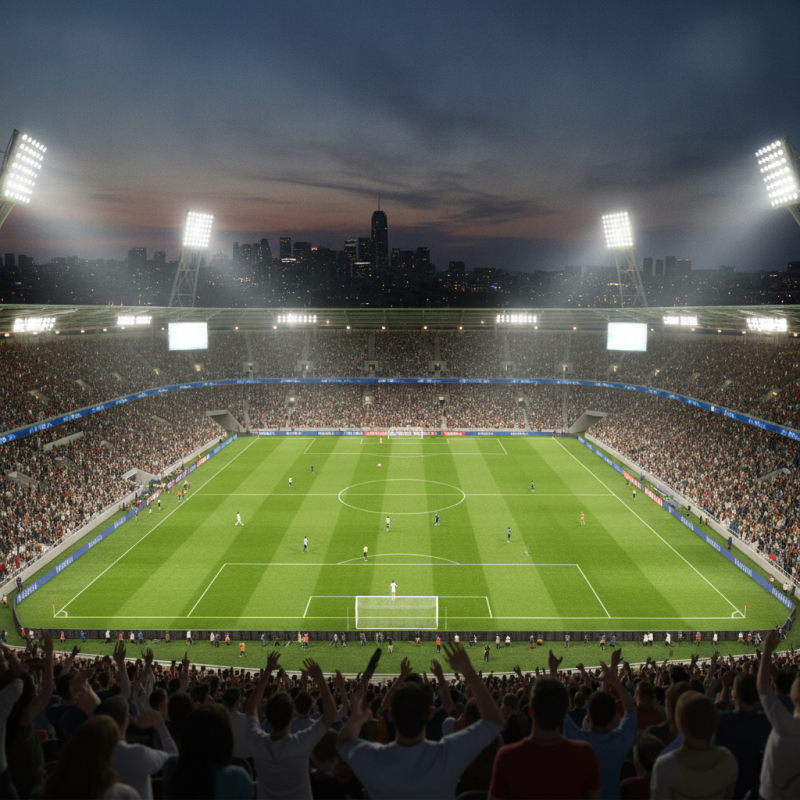
Lighting plays a critical role in international sports events, impacting both performance and viewer experience. Different sports require varying lighting levels to ensure safety and fairness. For instance, FIFA guidelines suggest that high-definition broadcasts require a minimum of 1,500 lux for soccer matches. In contrast, indoor sports like basketball need at least 1,200 lux to allow players to see the ball clearly.
For events like athletics, lighting must be uniform to prevent shadows that could affect performance. Studies show that athletes perform better under consistent lighting conditions, which is why track and field venues often use multiple high mast lights positioned strategically. In swimming, lighting must avoid glare and provide clear visibility for both competitors and officials, typically around 300 to 800 lux.
However, the implementation of these standards isn't without challenges. Many venues struggle with maintaining the required lux levels due to budget constraints or outdated infrastructure. As technology advances, innovative solutions such as LED lights offer promise, yet the investment remains a barrier for some. A 2022 report highlights that only 50% of venues meet the modern lighting standards set by international federations.
Lighting standards for international sports events are critical for ensuring fair play and enhancing the spectator experience. Established by various international sports federations, these standards cover factors like brightness, uniformity, and color temperature. For example, the International Olympic Committee (IOC) recommends a minimum illumination level of 1,500 lux for television broadcasts. This level is essential for high-definition coverage, aiding both viewers and athletes.
According to a report by the International Lighting Commission (ILC), lighting designs should prioritize safety and performance. For indoor sports, uniform lighting is crucial to avoid shadows that can distract competitors. The ILC also emphasizes the need to control glare, which can inhibit an athlete's ability to focus. This is particularly important in sports like badminton or tennis, where rapid movements are key.
**Tips:**
When designing lighting for events, consider using adjustable fixtures to adapt to various sports. Utilize LED technology for energy efficiency and quality light. Always conduct tests under different conditions to ensure optimal performance.
| Sport | Illuminance Level (Lux) | Color Rendering Index (CRI) | Recommended Lighting Type |
|---|---|---|---|
| Soccer | 1500 | > 70 | LED Floodlight |
| Basketball | 2000 | > 80 | LED Arena Lighting |
| Tennis | 1200 | > 80 | Fluorescent or LED |
| Swimming | 1000 | > 70 | LED Panel Lights |
| Athletics | 1200 | > 70 | Metal Halide or LED |
Proper lighting plays a crucial role in international sports events. Athletes depend on optimal lighting to perform at their best. Inadequate lighting can lead to decreased visibility and performance. This is particularly important in fast-paced sports like soccer and basketball. Athletes need to track the ball and their opponents effectively. A well-lit environment reduces the strain on their eyes, allowing for sharper focus.
For spectators, lighting enhances the overall experience. Bright, clear lighting helps fans see every detail of the event. Spectators want to catch all the action, from the goals to the celebrations. However, excessive brightness can create glare, which may detract from their experience. Finding the right balance is essential. Event organizers must evaluate the impact of lighting on both athletes and fans.
While standards exist, there can be gaps in implementation. Some venues may not meet these guidelines fully. This inconsistency leads to a variable experience for both participants and viewers. Continuous assessments and improvements are necessary. Lessons learned from previous events should inform future planning. Better lighting designs can lead to heightened performances and enhanced enjoyment for all involved.
Lighting in international sports events has evolved significantly due to technological advances. Modern lighting solutions focus on energy efficiency and superior performance. LED technology is a common choice. It provides bright, even illumination, enhancing visibility for athletes and spectators alike. Moreover, it reduces energy consumption, making events more sustainable.
Smart lighting systems are gaining traction as well. These systems can adjust brightness levels automatically based on the time of day or weather conditions. Such adaptability ensures optimal lighting during events. However, achieving the perfect balance between intensity and energy use remains a challenge. Organizers must consider local regulations and environmental impact.
The integration of advanced control systems allows for dynamic lighting displays. These systems can create exciting effects that enhance the viewing experience. Still, there is a need for continual improvement in coordination and technical expertise. Collaboration among engineers and event planners is vital. Lighting must meet both aesthetic and functional standards while ensuring safety for all participants.
Lighting standards for international sports events are crucial for ensuring regulatory compliance and safety in sports venues. The International Sports Federation recommends specific brightness levels depending on the sport. For example, a minimum illumination level of 1,200 lux is suggested for televised events, while non-broadcast activities may require at least 500 lux. This ensures athletes can perform safely and effectively.
Proper lighting design goes beyond just meeting brightness requirements. It must account for uniformity and glare reduction. Studies indicate that poor lighting can impair performance and increase injury risk. A 2020 report by the Sports Lighting Association noted that 30% of athletes reported difficulty in visibility during events with inadequate lighting. Meeting these standards is essential, but many venues still struggle with compliance.
Moreover, with evolving technologies, energy efficiency is becoming a pressing issue. Sustainable lighting solutions can lead to significant cost savings. However, the initial investment can deter some venues from upgrading. A balance between immediate costs and long-term benefits requires careful consideration. Ensuring safety and compliance in sports lighting is not just about illumination; it’s about creating an environment that fosters excellence and protects athletes.
: Brightness, uniformity, and color temperature are key. For example, a minimum of 1,500 lux is suggested for broadcasts.
Proper lighting helps athletes focus. Inadequate lighting can lead to decreased visibility, especially in fast-paced sports.
Uniform lighting avoids shadows that can distract competitors. It allows athletes to concentrate on their performance.
Use adjustable fixtures and LED technology for energy efficiency. Test lighting under various conditions for optimal results.
Well-lit environments enhance visibility for fans. However, excessive brightness can lead to glare, detracting from their enjoyment.
Many venues may not fully meet guidelines, creating inconsistent experiences. Continuous assessments are needed for improvement.
Modern lighting solutions, like LED technology, improve performance and energy efficiency, reducing environmental impact.
They automatically adjust brightness based on conditions, optimizing lighting during events. However, balancing intensity remains a challenge.
Coordination and technical expertise are crucial for creating exciting effects that enhance viewer experiences while ensuring safety.
Lessons learned inform future planning. Better designs improve athlete performance and enhance the enjoyment of spectators.
The article titled "What are the lighting standards for international sports events?" explores the essential lighting requirements tailored for various types of international sports events, emphasizing the standards established by different international sports federations and associations. It highlights the critical role lighting plays not only in ensuring regulatory compliance and safety at sports venues but also in enhancing athlete performance and maximizing the spectator experience.
Furthermore, the piece delves into the latest technological advancements in sports lighting solutions, showcasing how these innovations contribute to achieving optimal lighting standards that adapt to the specific demands of each sport. By addressing these facets, the article provides a comprehensive overview of how proper lighting is fundamental to the success of international sports competitions.

Rhynox Lighting