Selecting the right lumens for street lighting is crucial for both safety and efficiency. Many may wonder, "How to choose the right lumens for street lighting?" Street lighting affects visibility, deterring crime and ensuring safe passage at night. However, getting the lumens wrong can lead to dark areas or excessive glare.
Street lighting needs vary by location. Urban areas require brighter lights compared to rural zones. Factors like street width and nearby buildings influence this choice. The balance between intensity and energy efficiency is essential. Overshadowing this is the growing concern for sustainability. The challenge lies in finding that sweet spot.
While there are guidelines available, personal judgment plays a significant role. What works in one setting might not suit another. Evaluating local needs can lead to better outcomes. Testing different types can yield insights into effective illumination. Understanding specific community requirements is vital. Each choice should reflect both functional needs and comfort for pedestrians.
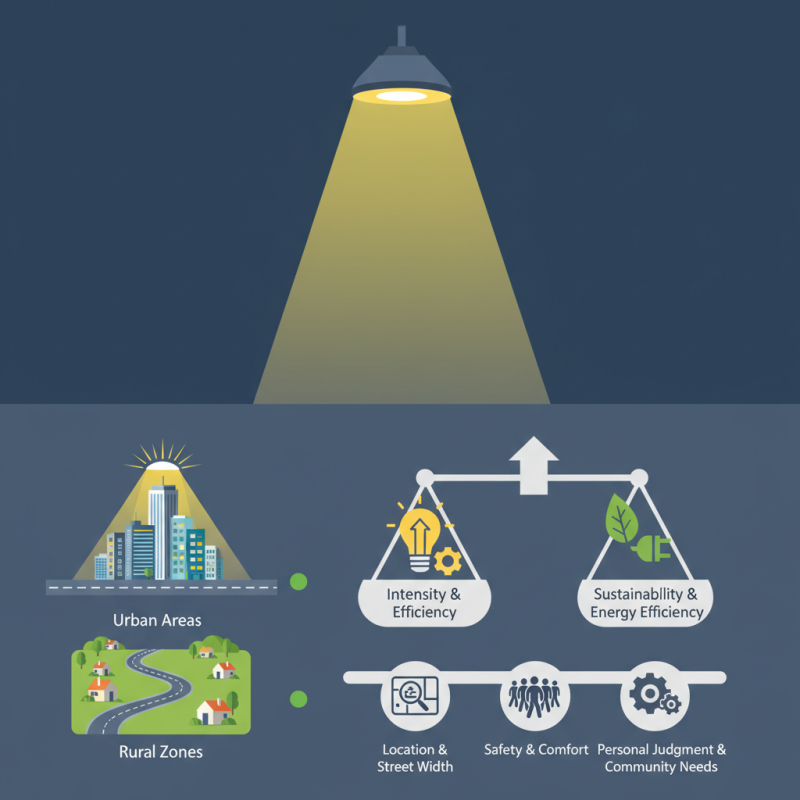
When considering street lighting, understanding lumens is essential. Lumens measure the total light output from a fixture. Choosing the right lumen level affects safety and visibility. For streets, a higher lumen output can enhance security. Proper illumination reduces accidents and improves walkability.
Different environments require different lumen levels. A residential area might need around 300-500 lumens per fixture. Conversely, commercial districts may require 600-1000 lumens. It's crucial to assess the surrounding features, like buildings and trees. Sometimes, lighting can create unwanted shadows. This can obscure potential hazards.
Evaluating lumens does not end with mere numbers. There's a balance between brightness and energy efficiency. Over-lighting can waste energy and create glare. Under-lighting may lead to dark spots, causing insecurity. Therefore, seeking the right lumen balance is vital for effective street lighting.
| Application | Recommended Lumens | Pole Height (Feet) | Light Distribution Type | Efficiency Rating |
|---|---|---|---|---|
| Urban Streets | 8000 - 12000 | 15 - 20 | Type II Distribution | A+ |
| Residential Areas | 3000 - 5000 | 10 - 15 | Type III Distribution | A |
| Highways | 15000 - 20000 | 20 - 30 | Type IV Distribution | A++ |
| Parks & Recreation | 4000 - 6000 | 10 - 15 | Type V Distribution | B |
Selecting the right lumens for street lighting is essential for safety and visibility. Different street types require different lumen outputs. For example, residential areas may need fewer lumens, around 100-150 lumens per linear foot. In contrast, busy thoroughfares may require 200-300 lumens per linear foot due to higher traffic and pedestrian activity.
Factors influencing lumen requirements include road width, traffic volume, and surrounding environmental conditions. A report by the International Council on Local Environmental Initiatives (ICLEI) indicates that well-lit streets can reduce accidents by as much as 30%. Urban settings with higher building density might also necessitate brighter lighting to penetrate shadows and enhance visibility.
The choice of luminaires impacts the overall lumen distribution. Different designs can reflect or diffuse light differently, affecting how it illuminates a given area. Poorly selected fixtures can lead to either too much light pollution or insufficient visibility, making it vital to balance aesthetics and practicality. Understanding these nuances helps create safer communities.
This chart illustrates the recommended lumens per square foot for different types of street lighting. The data reflects standard practices for urban planning and public safety, ensuring adequate visibility and security.
Selecting the appropriate lumens for street lighting involves understanding the unique lumen requirements of residential and commercial areas. Research indicates that optimal lighting can significantly affect safety and aesthetics. For residential areas, the general recommendation is between 100 to 150 lumens per square meter. This level ensures sufficient visibility without causing light pollution. Soft, warm lighting is often preferred, creating a welcoming atmosphere.
In contrast, commercial areas typically demand around 300 to 500 lumens per square meter. These spaces require brighter lighting to support bustling activities and ensure safety. For instance, parking lots and retail zones might benefit from higher lumen levels to illuminate pathways and entrances effectively. However, it is essential to balance brightness with potential glare, which could deter customers or create discomfort.
Different environments may require slight adjustments to these guidelines. Analyzing a space's specific needs and existing light conditions is crucial. What works in a serene neighborhood may not hold up in a vibrant commercial hub. Balancing illumination and energy efficiency is an ongoing challenge for urban planners and lighting professionals. Always consider local regulations and community feedback when making lighting decisions.
When considering street lighting, lumens output plays a crucial role. LED lights and traditional lighting sources differ significantly in this area. LEDs typically provide higher lumens per watt. This makes them more efficient for urban planning. For instance, one LED street light can produce 15,000 lumens, illuminating larger areas with less energy.
Traditional street lights, such as high-pressure sodium lamps, usually emit varying lumens. They usually range from 10,000 to 20,000 lumens. However, the light quality may not be as good as LEDs. HPS lights can create a yellow-orange hue, diminishing color perception. Consideration of visual comfort is essential for safety.
Installation and maintenance are other factors to evaluate. LED lights last significantly longer than traditional options. This results in lower long-term costs. However, the initial investment can be high. City planners must balance upfront costs with lasting benefits. Reflecting on these differences is key to making informed choices in street lighting.
When considering street lighting, regulatory standards play a crucial role. Different jurisdictions have specific guidelines. These dictate how many lumens are necessary for safety and visibility. Understanding these standards helps ensure compliance. It also fosters community trust.
The recommended lumens vary based on street type. Residential areas may require fewer lumens. A common range is around 100 to 200 lumens per fixture. In contrast, busy intersections need brighter lights, often around 300 to 800 lumens. This disparity highlights the importance of tailored lighting solutions.
However, not all solutions are perfect. Some communities may choose lower lumens to minimize light pollution. This can lead to dark areas that feel unsafe. Finding the balance is ongoing. Authorities must evaluate their choices continuously. Stakeholder feedback is vital in this process.
: Generally, 100 to 150 lumens per square meter are recommended for residential lighting.
It creates a welcoming atmosphere without contributing to light pollution.
Commercial areas typically need 300 to 500 lumens per square meter for safety and activities.
Excessive brightness can cause glare, which may discourage customers or create discomfort.
LED lights provide higher lumens per watt, making them more energy-efficient for larger areas.
LEDs generally last much longer, resulting in lower long-term maintenance costs.
It’s important to analyze existing light conditions and community feedback for tailored solutions.
Yes, different jurisdictions have specific guidelines for lumens necessary for safety and visibility.
Busy intersections may require 300 to 800 lumens, while residential areas often need 100 to 200 lumens.
They must balance safety, visibility, and light pollution while considering community input.
Selecting the right lumens for street lighting is crucial for enhancing safety and visibility in urban environments. Understanding lumens and their role in street lighting efficiency begins with recognizing that different street types require varying lumen levels. Factors influencing these requirements include traffic volume, pedestrian activity, and the specific purpose of the area, such as residential versus commercial zones.
When considering "how to choose the right lumens for street lighting," it is essential to compare the output of LED solutions with traditional lighting options. LED lights often provide higher lumen outputs with greater energy efficiency, making them a preferred choice in many applications. Additionally, adherence to regulatory standards and recommendations ensures that the lumen levels meet necessary safety and functional criteria, ultimately contributing to well-lit and secure public spaces.

Rhynox Lighting