Low-voltage garden lighting can make a path glow without bringing household-level voltage to every fixture. That lower voltage reduces the risk of severe electric shock, but it does not make a system risk-free. Wet soil, damaged insulation, overloaded transformers, and loose connections still deserve attention. Safety comes from careful planning, suitable outdoor-rated equipment, and regular checks—not from voltage alone.
So, How to install low voltage garden lighting safely? Begin with the transformer and its instructions. Place it in a dry, ventilated spot, then map the cable route before digging. Check for buried utilities, keep connections protected from moisture, and avoid pinching cable beneath edging or paving. A small pathway light should feel secure in the ground, with no exposed copper or loose wire nearby. If a fitting flickers after rain, switch off the system and inspect it rather than assuming the problem will disappear.
Lighting educator Mark Lien is a relevant industry voice, but I cannot verify a direct quotation from him on this specific installation topic. It would be misleading to invent one. The practical reminder here is simple: “Low voltage lowers risk; careful installation protects the system.” That line is an editorial summary, not a verified quote. Even a well-planned layout can have weak spots, especially around damp joints and tight cable bends. Check the manufacturer’s guidance, and ask a qualified professional when the installation is unclear.
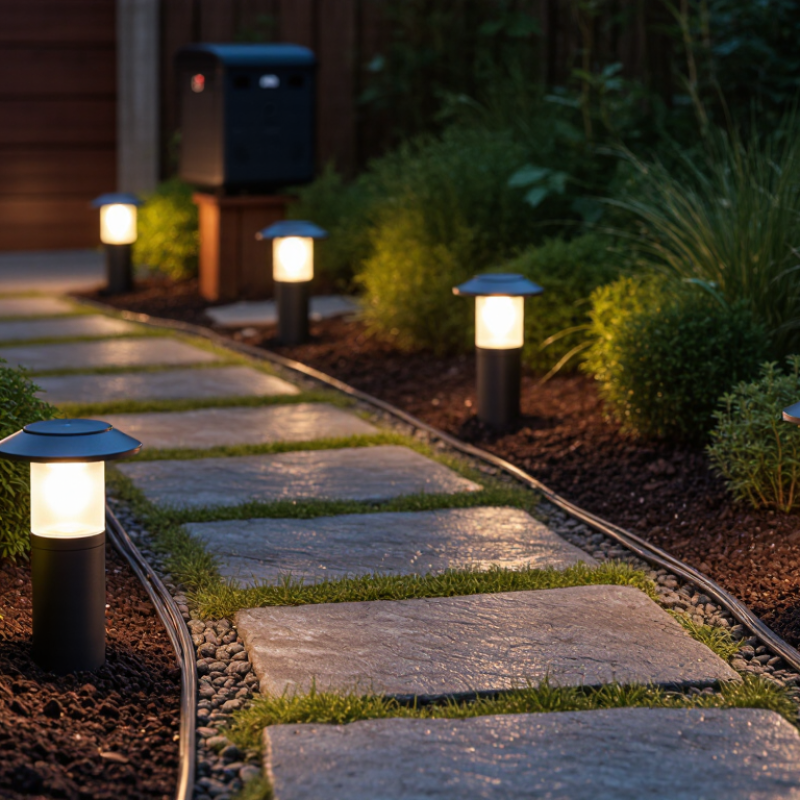
Low-voltage garden lighting uses a transformer to reduce household electricity to a lower output, commonly 12 volts. The U.S. Department of Energy’s Energy Saver guidance describes 12-volt systems as a landscape-lighting option. The transformer connects to the mains supply; a cable then carries lower-voltage power to fixtures beside paths, flower beds, or steps. Small spotlights can pick out a tree trunk, while path lights cast a gentle pool across gravel. Simple in principle. The transformer’s input side still carries mains voltage, so it deserves care.
The voltage difference matters. IEC 61140:2016 defines extra-low voltage as no more than 50 volts AC or 120 volts ripple-free DC. A typical 12-volt garden system sits well below those limits, reducing the risk of a severe electric shock compared with mains-powered fittings. Reduced risk is not zero risk. Rain, damaged insulation, loose connections, or unsuitable equipment can still create hazards. Choose fixtures and connectors rated for outdoor exposure, keep connections protected from water, and follow the transformer’s installation instructions. It is easy to focus on the lights and overlook the cable route; I’d plan that route before placing fixtures.
A low-voltage garden system commonly steps household power down to 12 or 24 volts before it reaches outdoor fixtures. That matters when hands are damp or a cable gets nicked: lower voltage generally reduces the chance of a dangerous electric shock. IEC 60364-4-41 describes a 50-volt AC limit for extra-low-voltage protection in many conditions, but safe operation still depends on correct circuit design. Lower voltage is not zero risk.
The transformer is important.
It remains connected to household voltage, so it should sit in a suitable, dry location and be installed according to its instructions. Use outdoor-rated cable and connectors, protect cable runs from spades and edging tools, and keep connections out of standing water. Small details count.
The wider risk is real.
NFPA’s Electrical Fires report estimated an average of 32,620 U.S. home structure fires each year involving electrical failure or malfunction during 2015–2019. That figure covers many kinds of household equipment; it does not mean low-voltage garden lights caused those fires. It does show why sound wiring and suitable equipment matter. A low-voltage setup reduces shock exposure at the lights, but overloaded transformers, damaged insulation, or poor connections can still create hazards. Inspect the system after winter. I would not assume a cable is safe just because the lamps still work.
Low-voltage garden lighting typically uses a transformer to reduce household voltage before power reaches outdoor fixtures. This lower output can reduce the risk of serious electric shock, but it does not make a system risk-free. The transformer should be suitable for outdoor use and sized for the connected lights. Many models include overload or short-circuit protection. Check the product instructions rather than assuming every unit has the same safeguards. Keep the transformer’s mains connection dry and have that part installed by a qualified professional when needed. Small details matter.
Outdoor-rated cable and weather-resistant connectors help protect the system from rain, damp soil, and sprinkler spray. Connectors should fit firmly, with no exposed copper or loose joins. Choose fixtures with an appropriate ingress-protection rating for their location; a light beside a pond faces different conditions from one under a sheltered eave. Route cable away from sharp edging tools, and avoid burying connections unless they are designed for burial. A residual-current device can add protection on the supply side, where applicable. Even a tidy installation can develop faults as roots shift or seals age. Inspect cables and fittings periodically, especially after landscaping or heavy weather. If a breaker trips repeatedly, switch the system off and investigate rather than resetting it again.
Low-voltage garden lighting reduces electric-shock risk, but it does not remove every electrical hazard. Use an outdoor-rated transformer sized for the combined load of the fixtures. The U.S. Department of Energy’s Energy Saver guidance reports that LEDs use at least 75% less energy than incandescent bulbs and can last up to 25 times longer. Lower energy use is helpful, not a substitute for careful installation.
Have buried utilities marked before digging. Route cable away from sharp edging and mower paths, following the cable and transformer instructions and local requirements. Use weather-resistant connectors rated for outdoor use, and keep plugs and the transformer away from standing water. Connect the transformer to a GFCI-protected outlet. Have a qualified electrician handle mains-side outlet work. Switch power off before adjusting fixtures, then check for flickering, damaged insulation, or warm connectors. Do not guess.
Tips: Test the layout above ground before burying cable. Leave gentle slack at each fixture, and recheck connections after heavy rain. Small details matter.
Low-voltage garden lights use a transformer to reduce household voltage, which can lower the risk of serious shock. Damp soil, wet hands, and damaged cables still deserve respect. Safe does not mean risk-free. Check the transformer’s instructions and keep connections protected from rain and standing water.
Consult a qualified electrician before connecting the transformer to a new outdoor outlet or changing household wiring. This is especially important if the outlet has no weather protection, trips repeatedly, or sits near a pond or irrigation line. An electrician can check the supply, grounding, and protective devices, then confirm the setup suits the load. A small transformer does not make mains-side work simple.
Ask for help if you need to bury cable near existing utilities, splice damaged wiring, or add lights to an older circuit. The low-voltage side may seem straightforward, but mixed cable types and hidden connections can cause faults. It is easy to overlook a nick beneath mulch. If lights flicker, a transformer feels unusually hot, or a breaker trips, switch the system off and have it inspected. Guessing is not a repair.
It uses a transformer to reduce household power, commonly to 12 volts. A cable then supplies outdoor lights.
No. It lowers shock risk, but rain, damaged insulation, and loose connections can still cause hazards.
Use a model rated for outdoor conditions. Keep its mains connection dry and away from standing water.
Check the fixture’s weather rating for its location. A light near a pond needs more protection than one under a sheltered eave.
Keep it away from sharp edging and mower paths. Have buried utilities marked before digging, and follow the product instructions.
Use weather-resistant connectors rated for outdoor use. Keep joins secure, with no exposed copper, and bury them only if designed for burial.
Test the lights above ground before burying cable. Leave gentle slack near each fixture; it makes later adjustments easier.
Turn it off before adjusting fixtures. If a breaker trips repeatedly, stop resetting it and investigate the fault.
Check cables and fittings periodically, especially after heavy rain or landscaping. Roots shift. Seals age.
Low-voltage garden lighting uses a transformer to reduce household electricity to a lower voltage for outdoor lights. This can reduce the risk of serious electric shock, but it does not remove all electrical hazards. Safe systems rely on suitable outdoor-rated fixtures, protected connections, correctly sized cables, and a transformer designed for the total lighting load.
How to install low voltage garden lighting safely? Plan the layout first, follow the manufacturer’s instructions, and keep cables and connections protected from moisture, damage, and places where they could be disturbed during gardening. Switch off the power while assembling the system, check that every connection is secure, and test the lights before covering or concealing cables. If the installation involves household-voltage wiring, uncertain connections, or problems with the power supply, consult a qualified electrician rather than attempting work beyond your experience.

Rhynox Lighting